
Seafood

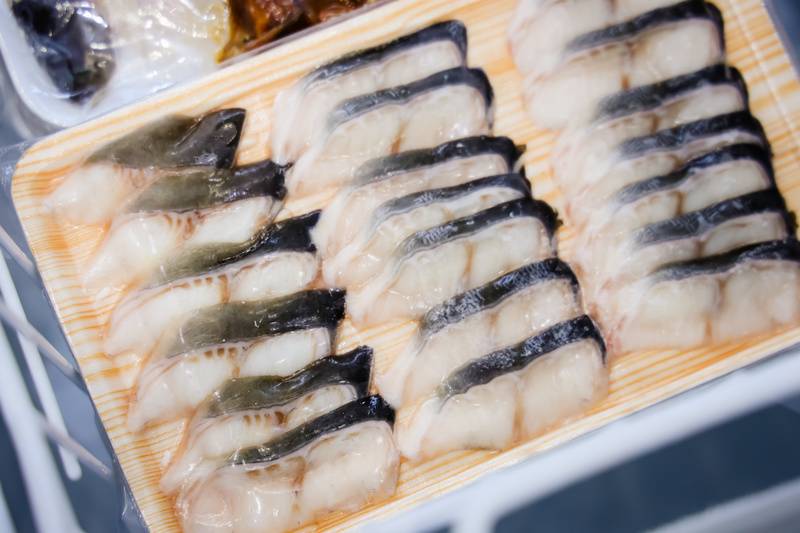
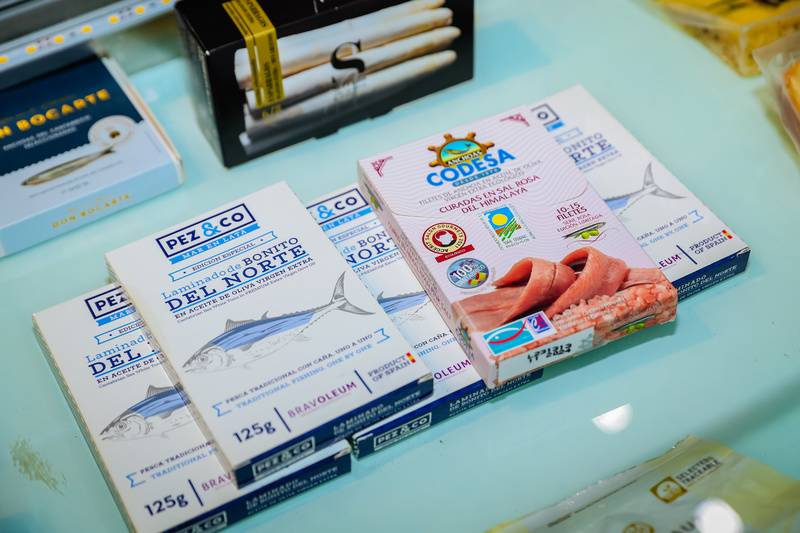
The seafood segment focuses on various types of seafood, including but not limited to fish, shrimp, crab and shellfish, etc., and also covers seafood processing technology, cold chain logistics, food safety testing and other upstream and downstream technology and services.
From January to September 2025, the cumulative export value of aquatic products and their processed goods reached US$14.8 billion, representing a 3.6% increase compared with the same period last year. Within this figure, fish and fish products accounted for US$8.72 billion, marking a 5.9% year-on-year growth. In 2024, China's imports of aquatic products surpassed US$22 billion, reflecting sustained growth in domestic consumer demand for high-quality, diverse seafood products. This demonstrates a pattern of steady development in import-export trade, driven by both domestic consumption and international demand.
Shenzhen, as a pivotal city in South China, possesses exceptional marine resources and a well-developed maritime industry. The Shenzhen Municipal Government is committed to advancing the high-quality development of its marine economy, having introduced a series of policies to accelerate the construction of a globally competitive maritime hub city. Data indicates that in 2024, Guangdong Province's marine gross domestic product exceeded RMB 2 trillion, maintaining its position as the nation's leader for the 30th consecutive year, with a nominal year-on-year growth of 5.4%. Guangdong Province has established a development framework centred on Guangzhou and Shenzhen as core drivers, with Dongguan, Huizhou, Zhanjiang, and Zhuhai providing key support. The combined marine economic output of the Guangzhou-Shenzhen ‘dual-core’ region exceeds one trillion yuan.
In order to facilitate the development of food trade in the Greater Bay Area, especially for cold chain products with high time-sensitive requirements, the ports in the region have continued to optimise their supervision and service modes. A number of innovative measures to significantly improve the efficiency of customs clearance. For example, through the integrated declaration and inspection process, the overall customs clearance time of import and export goods is significantly compressed, effectively reducing the risk of fresh food in the port of detention. The application of intelligent standard system at key traffic nodes can achieve instantaneous sharing of information on cross-boundary vehicles and the speacial "green window" inspection channel is set for the fresh and live food. At the same time, the promotion of electronic circulation of inspection and quarantine certificates, paperless customs clearance has become a reality, providing a solid guarantee for the efficient cross-border circulation of various types of food, including aquatic products. These policy dividends are accelerating the construction of an efficient and convenient cold chain logistics network in the Greater Bay Area, laying a key foundation for seizing the new food and beverage track.
In the first half of this year, capital investment in cold storage projects reached 22.306 billion yuan, marking a year-on-year increase of 7.67%. By the end of June, the total cold storage capacity (primarily public food cold storage facilities serving sales regions) stood at 260 million cubic metres, equivalent to approximately 104 million tonnes of standard storage capacity, representing a year-on-year growth of 6.12%. Data from the China Federation of Logistics & Purchasing indicates that refrigerated truck sales reached 29,474 units in the first half of this year, marking an 18.19% year-on-year increase.
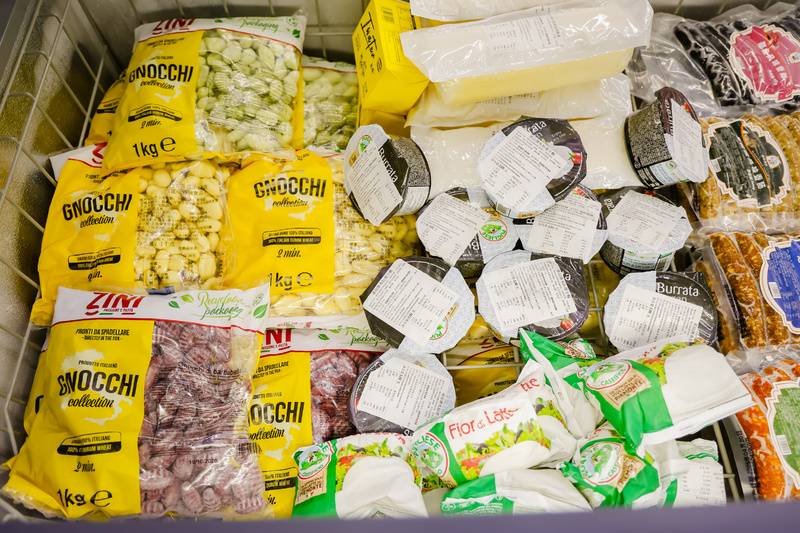
China Report Hall News reports that by October 2025, China's frozen food market surpassed RMB 450 billion in scale, marking a 12.3% year-on-year increase and establishing itself as the fastest-growing segment within the food industry. Leading enterprises are capturing market share through technological innovation and channel expansion into lower-tier markets, while investment institutions focus on structural opportunities arising from supply chain optimisation and consumption upgrades. Against the backdrop of policy support for cold chain logistics development, the frozen food sector is undergoing a transformation from scale expansion to value creation. Strategic positioning and return on investment among key players have become core metrics for industry observation.
*Reference:《广东海洋经济发展报告(2025)》《2025广东省海洋经济发展指数》《粤港澳大湾区海产品交易中心开业 助推珠海海洋经济高质量发展》《中国海洋经济产业深度调研与投资战略分析报告》《中国报告大厅网讯》《人民日报海外版》